INDOOR Experiences
PART 1
Timeless Wisdom


Duration: 2.5 hrs
Come witness this marvellous journey from the dawn of civilization to understanding key concepts of the scientific and logical foundations of Jain concepts, values, and philosophy, explored in fifteen special galleries:
The Batch Organizer will accompany the visitor batch (max. 40 people) through the 15 timed galleries
- Timeless Jain Wisdom
- Dawn of Civilization
- Modern lifestyle Challenges
- Who am I?
- Karma – Outcome of Actions
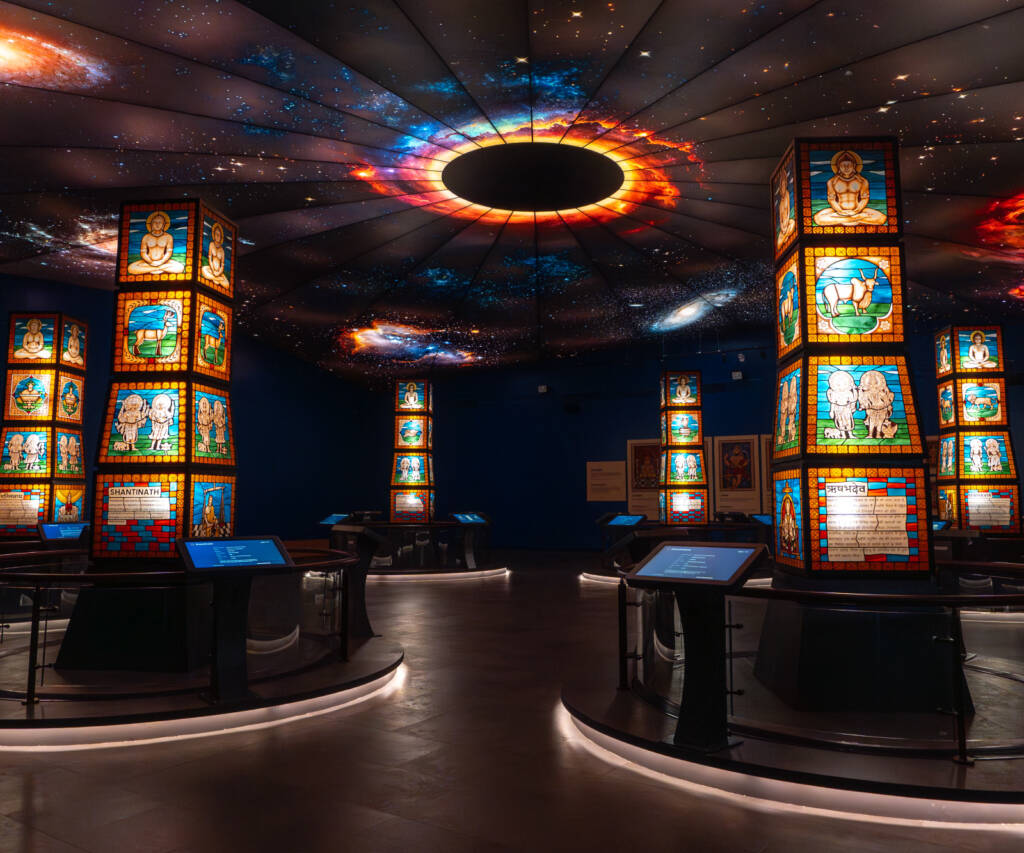
- Jain Concept of Space and Time
- Samavasaran – The Tirthankar’s Grand Assembly
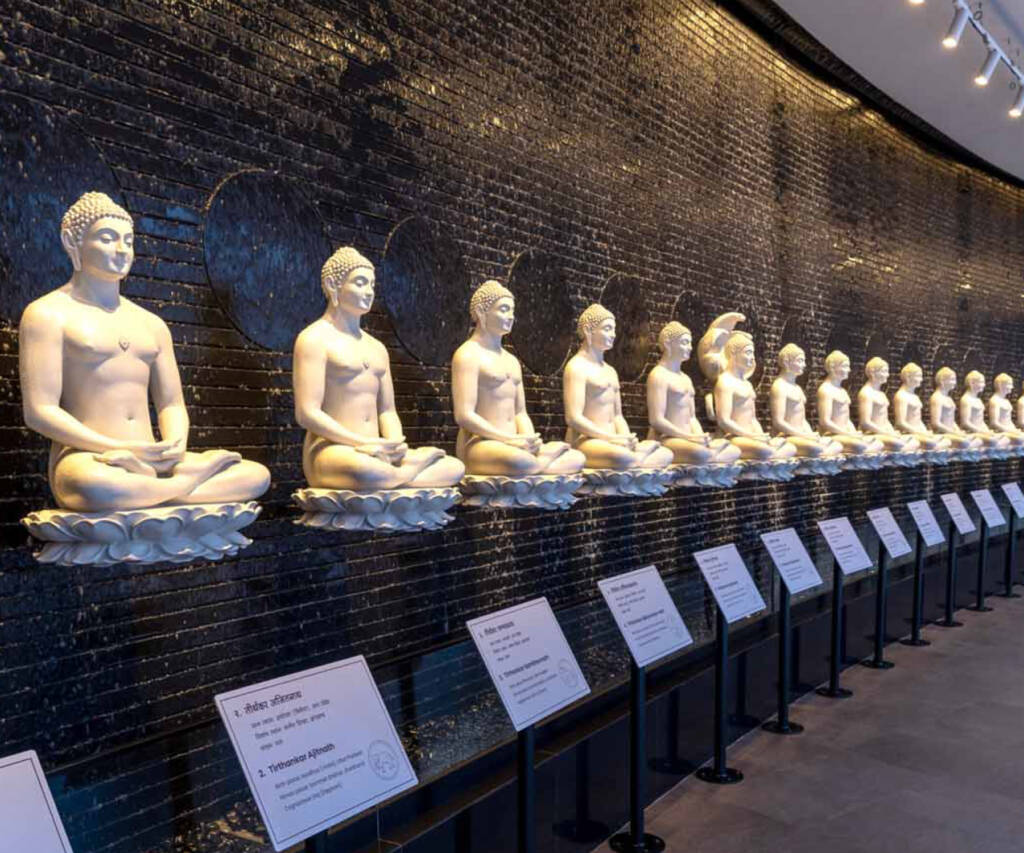
- 24 Tirthankars
- Six Exemplars
- Ahimsa – do no harm.
- Leshya – Shades of Karma
- Self Restraint
- Humankind and Nature
- Anekantvad – Respecting
- other viewpoints
- Aparigraha – Non attachment
Towards Spiritual elevation
Duration: 2.5 hrs
The Batch Organizer will accompany the visitor batch
(max. 40 people) through the 15 timed galleries
PART 2


Duration: 1-1.5 hrs
This part of the Centre showcases the evolution, development, and geographic spread of Shraman and Jain philosophy, the most ancient tradition of India, across six exquisitely appointed galleries.
- Evolution Gallery: Discover contributions to the history and values of Jain tradition by great personalities, Empires, flourishing cities and trade routes.
- Society Gallery: Learn about great personalities in the Jain tradition who contributed towards political economy, philosophy, spirituality, industry, social development, entertainment, education, sports, and art.
- Culture Gallery: Explore the traditional routines of intellectual activities, social conduct, and participation in Jain festivals and rituals, for both householders (Shravaks) and ascetics (Shramans).
- Literature Gallery: Discover the timeless teachings of the Tirthankars. Like all Indian traditions, these were originally oral and later compiled into seminal volumes called Agams. The vast ocean of Jain literature was further enriched by the magnificent contributions of the Acharyas. Most Jain literature is composed in naturally evolved regional languages called Prakrits. Learn about the evolution of scripts, starting with Brahmi—the mother of all scripts, developed by the daughter of the first Tirthankar, Rishabhdev. This script later evolved into regional scripts like Devanagari, Kannada, Gujarati, Bengali, and more.
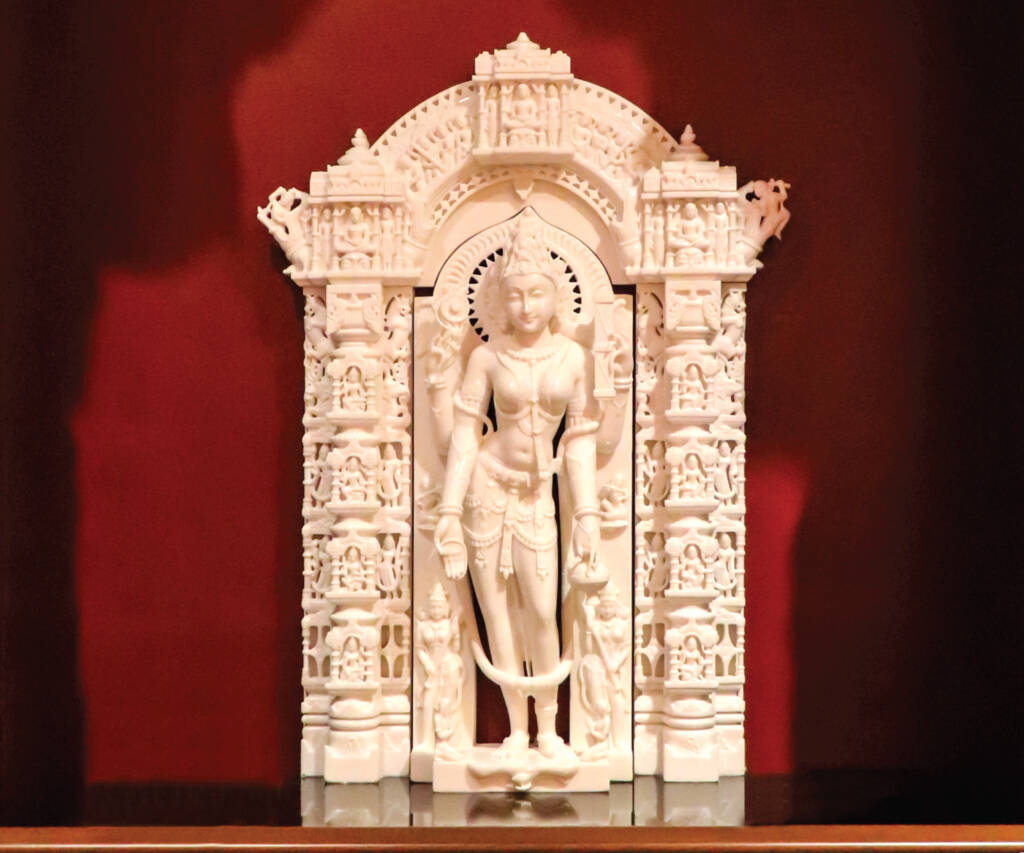
- Art Gallery: Admire the beautiful art forms developed over centuries, including auspicious symbols, narratives associated with Tirthankar sculptures, and more.
PART 3


Duration: 40 mins
Each one of us constantly strives to ensure happiness, safety, security, and prosperity for ourselves, our families, and our society, especially our loved ones, despite the challenges we face.
PART 4


Duration: 40 mins
Formative Influence of Jain Values on India’s Diverse Traditions.
This gallery presents numerous distinguished intellectuals, great teachers, and enlightened individuals, primarily from India, who have significantly shaped the inclusive and compassionate social and ethical values of the Bharatiya spiritual tradition.
- In the Indian school of thought, ‘Niti’ refers to the ‘ethical and strategic considerations’ that form the foundation of good governance, determining what is beneficial or detrimental for individuals and society.
- ‘Riti’ describes the ‘responsible social behavioural guidelines’, outlining how individuals and society should align their actions.
- These principles equally apply to all, from the richest to the poorest, the intellectual to the common person, setting limits on rights and indicating responsibilities.
- These principles embody India’s collaborative, inclusive, and consensual social tradition.
- India’s cultural evolution over millennia is notable for the absence of severe conflict, war, or enduring enmity between different streams of Indian culture. This stands in stark contrast to Western value systems, where inter-religious conflict has usually defined history.
Open Air Heritage Walk
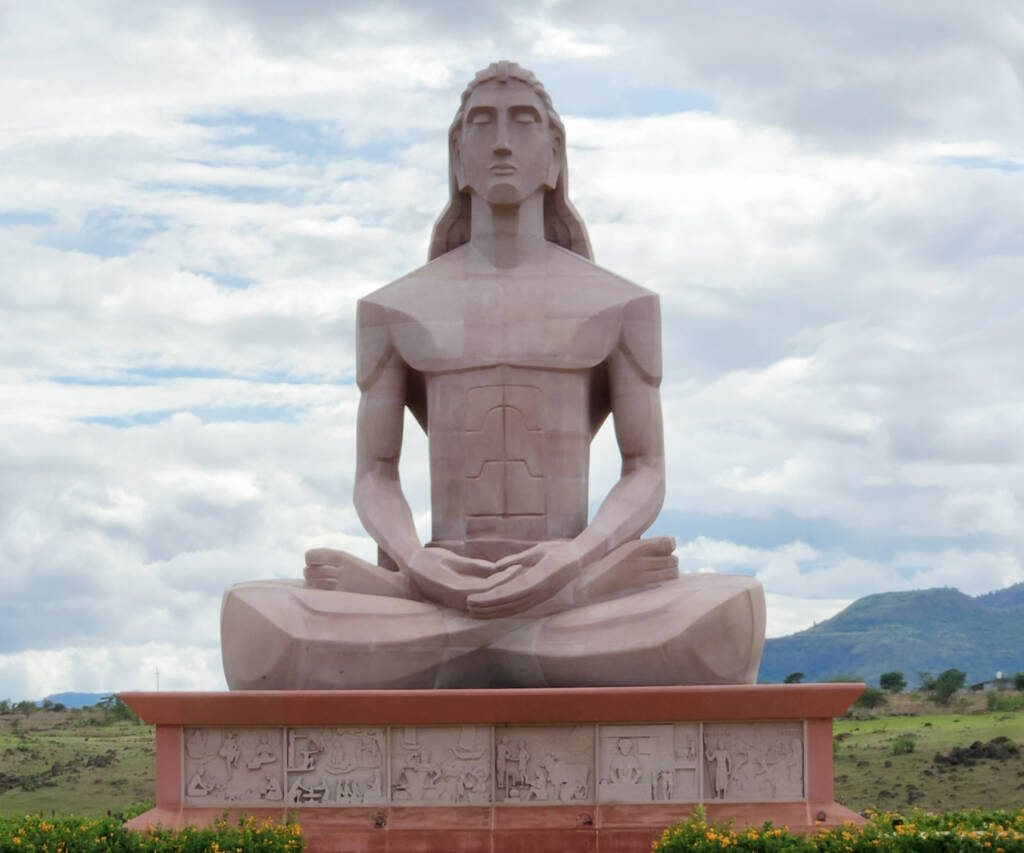
Rishabhdev

The magnificent 13.2 m (43 feet) installation of first Tirthankar Rishabhdev, in meditation pose, is placed at the end of the Festival Walk. This statue draws inspiration from the Art Deco style – a unique and contemporary interpretation of the Tirthankar statues, as against the traditional depictions. All around the statue are murals depicting the teachings of the founder of our civilisation – Tirthankar Rishabhdev and inspiring stories of achievements of his daughters Brahmi and Sundari, as also his sons Bharat and Bahubali.
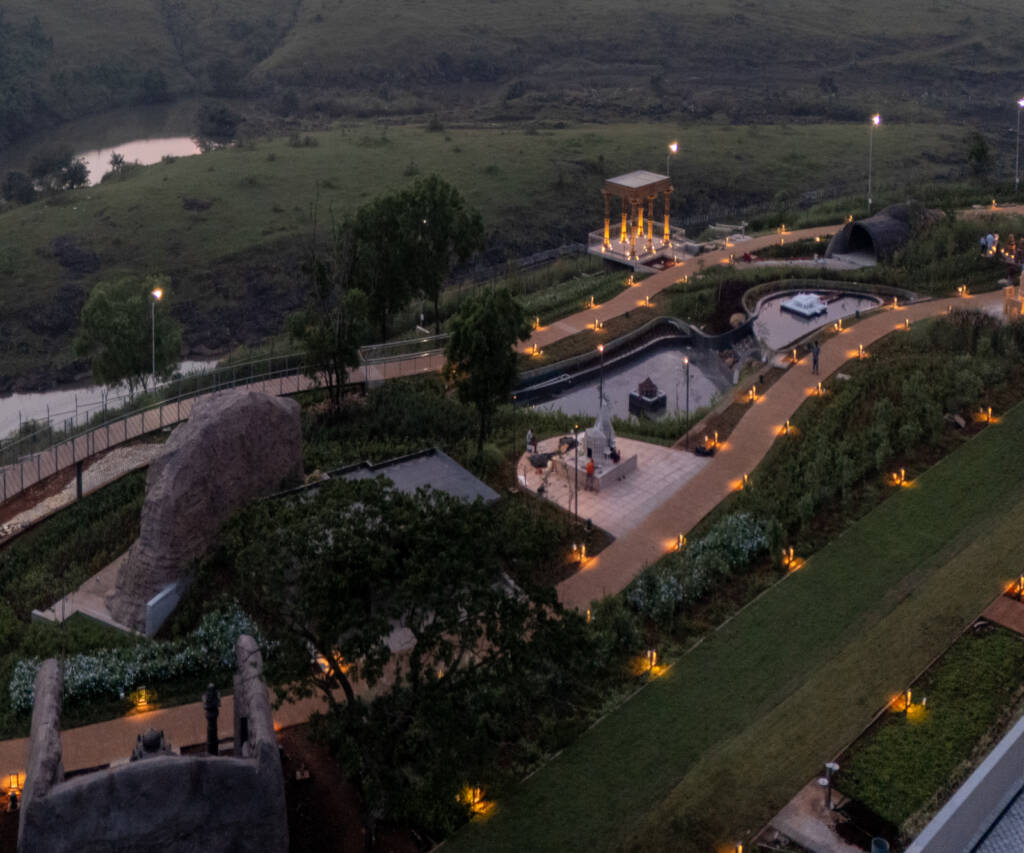
Heritage Walk

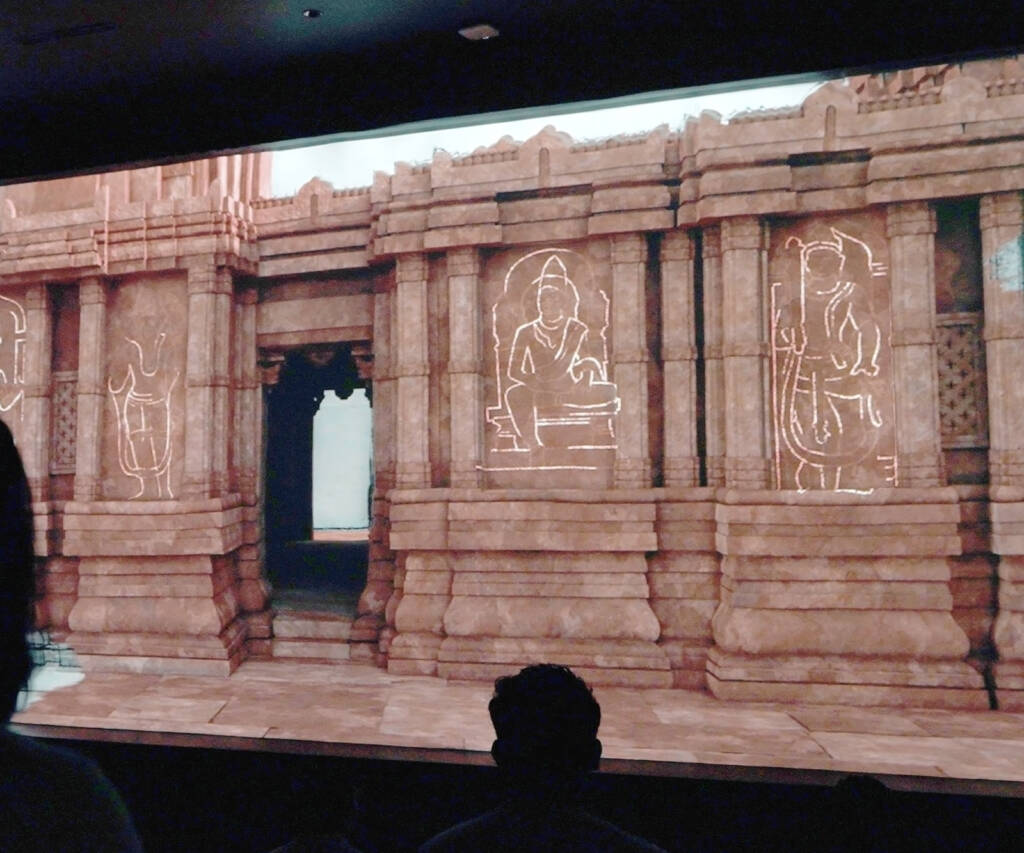
Designed along the Indrayani River, the 320 m (1050 feet)long nature trail/walk showcasing beautifully recreated miniatures of ancient Jain monuments, displaying the glorius cultural and historical legacy of Jain heritage across India.
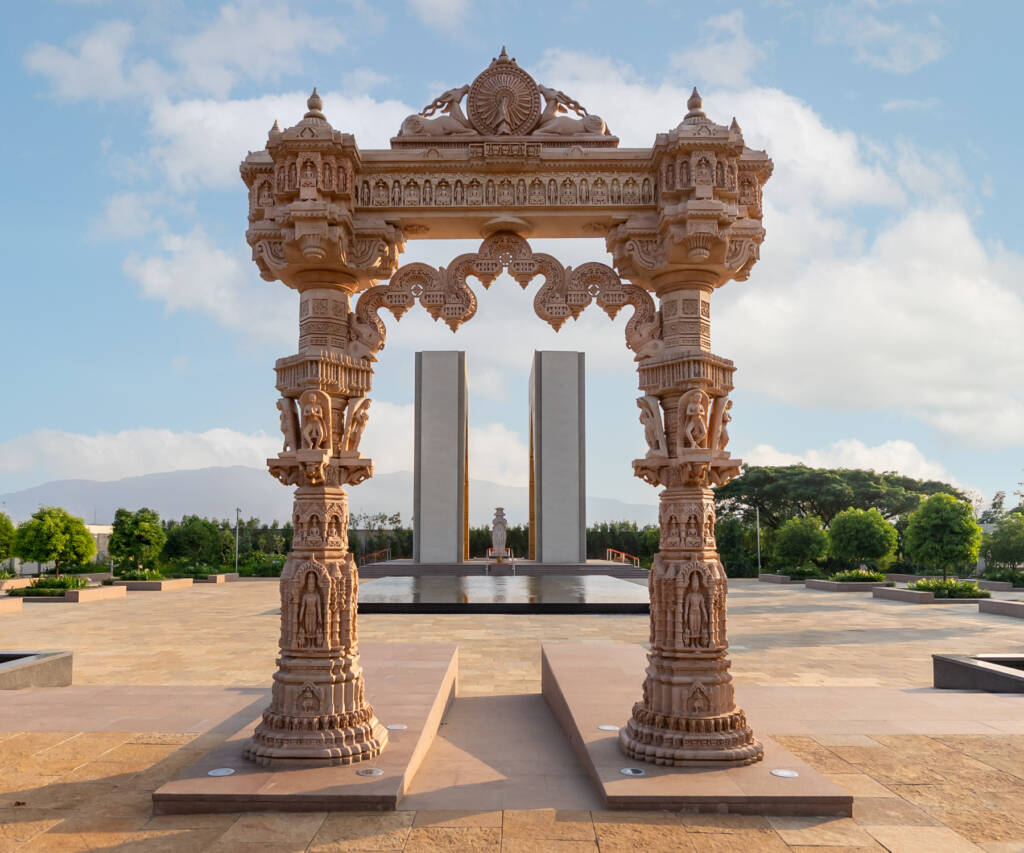
Plaza of Equanimity

A 17 m (56.5 feet) tall temple installation with a magnificent, tall, Sarvatobhadra statue (all four sides facing) standing inside, surrounded by a garden with beautiful flowering trees and a reflection pool, conducive to a contemplative and peaceful environment.
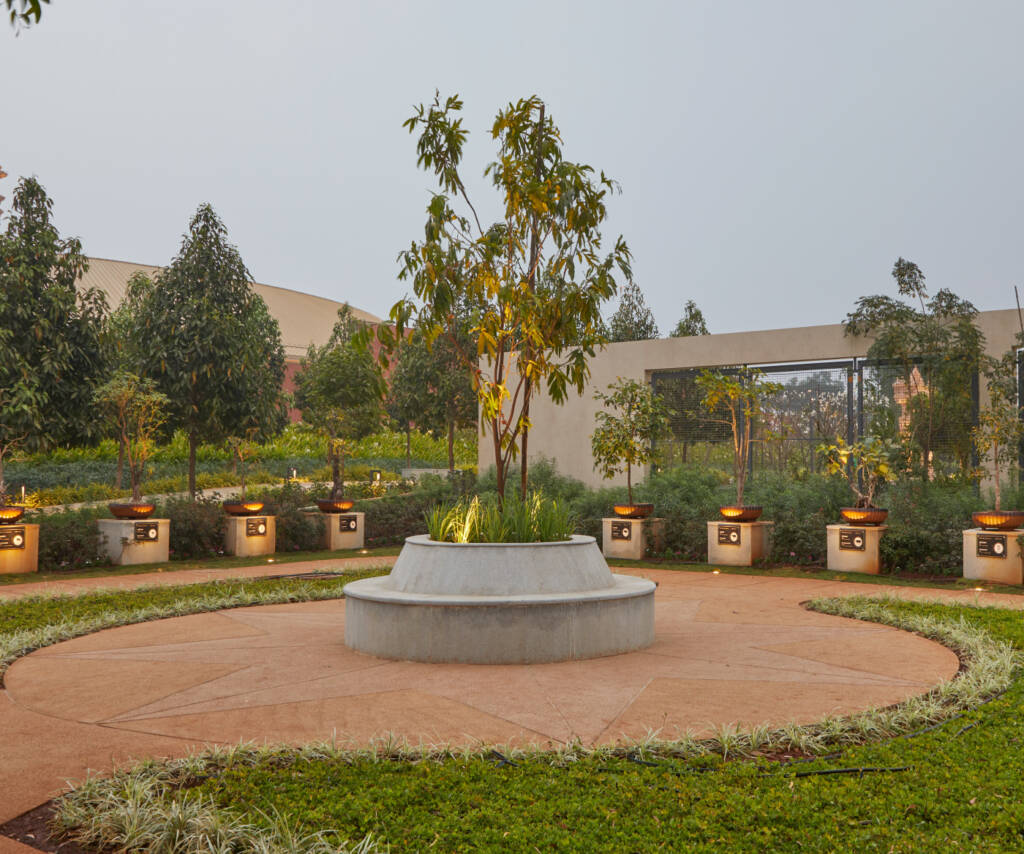
Garden of the Revered

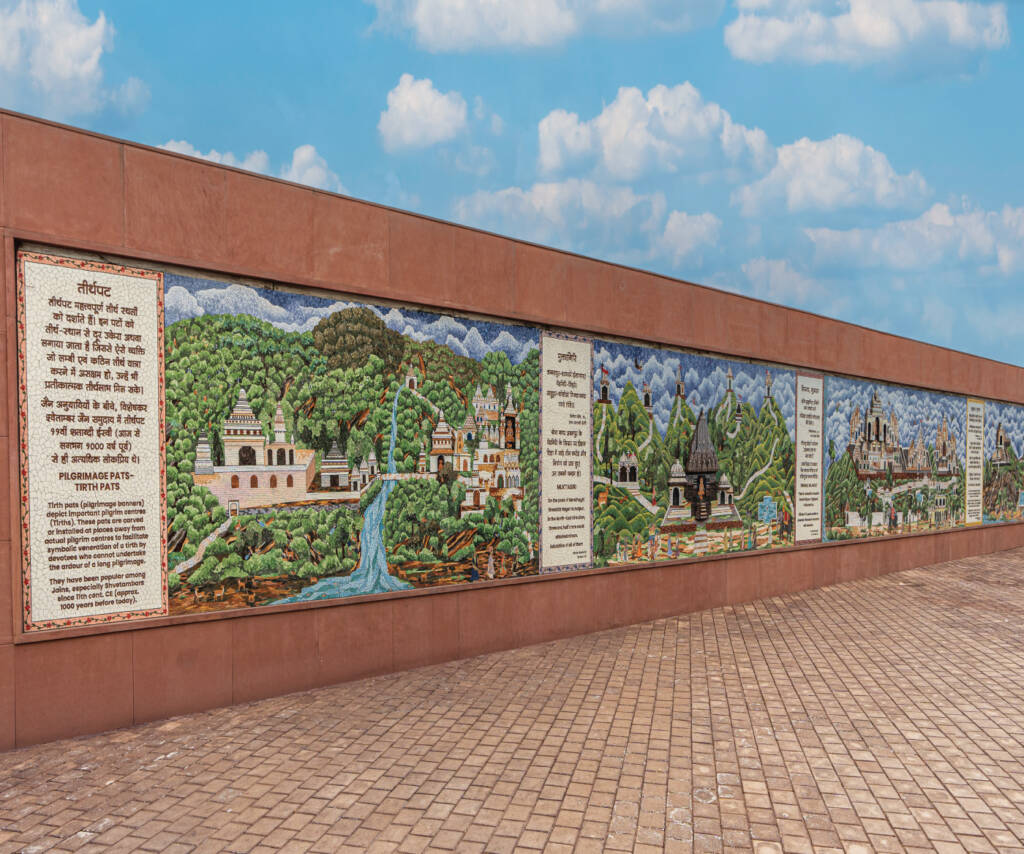
Mandal Wall

The modern Museum building stands on a large platform representing the traditional Mandala form.The Mandal plinth Walls display stunning artistic murals of magnificent Jain pilgrim centers.
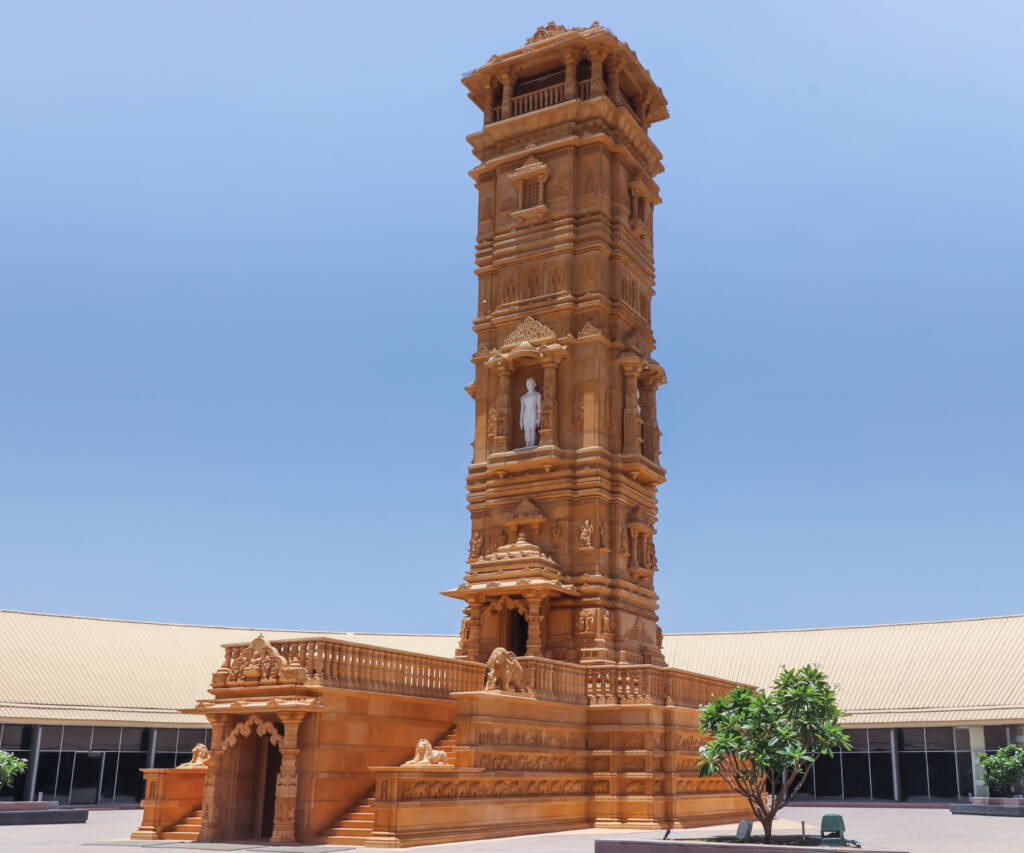
Manstambh

The 30.5 m (100 feet) tall Manstambh tower, inspired by traditional design, is our modern interpretation of stages of spiritual elevation. The seven intricately carved layers/ tiers represent important aspects of Jainism and human life, which includes the householders, ascetics, Tirthankars and Siddhas.The viewing gallery on top allows a glimpse into the space we inhabit, juxtaposed with the worldly scenes below, symbolizing that our reality and pursuit of Truth lies in between.
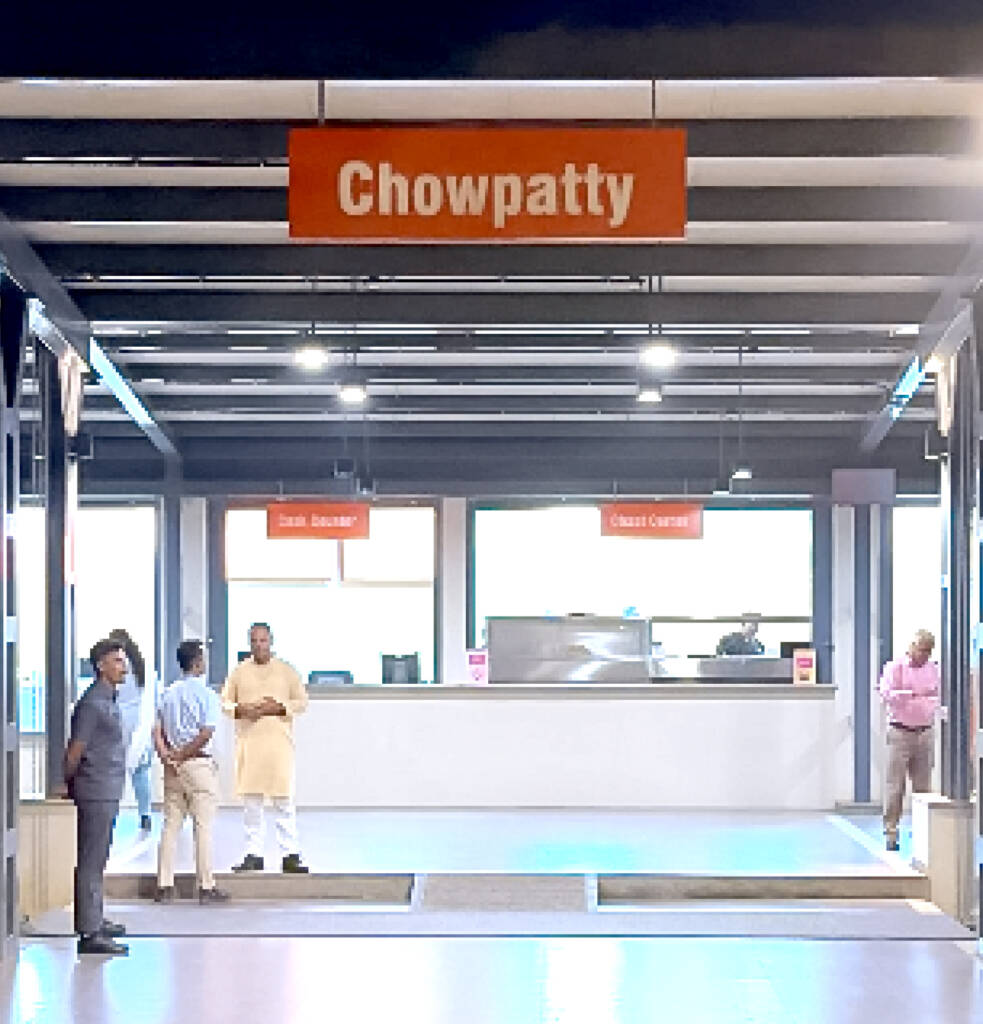
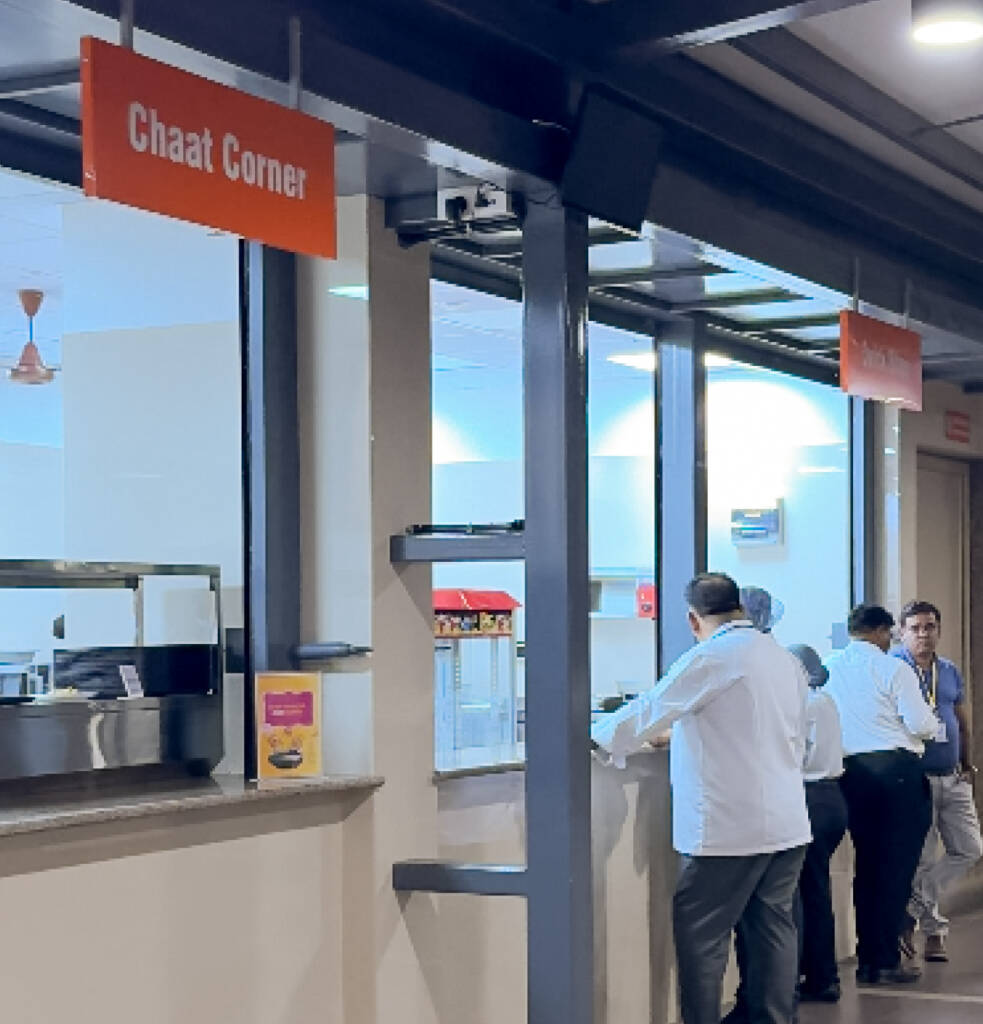
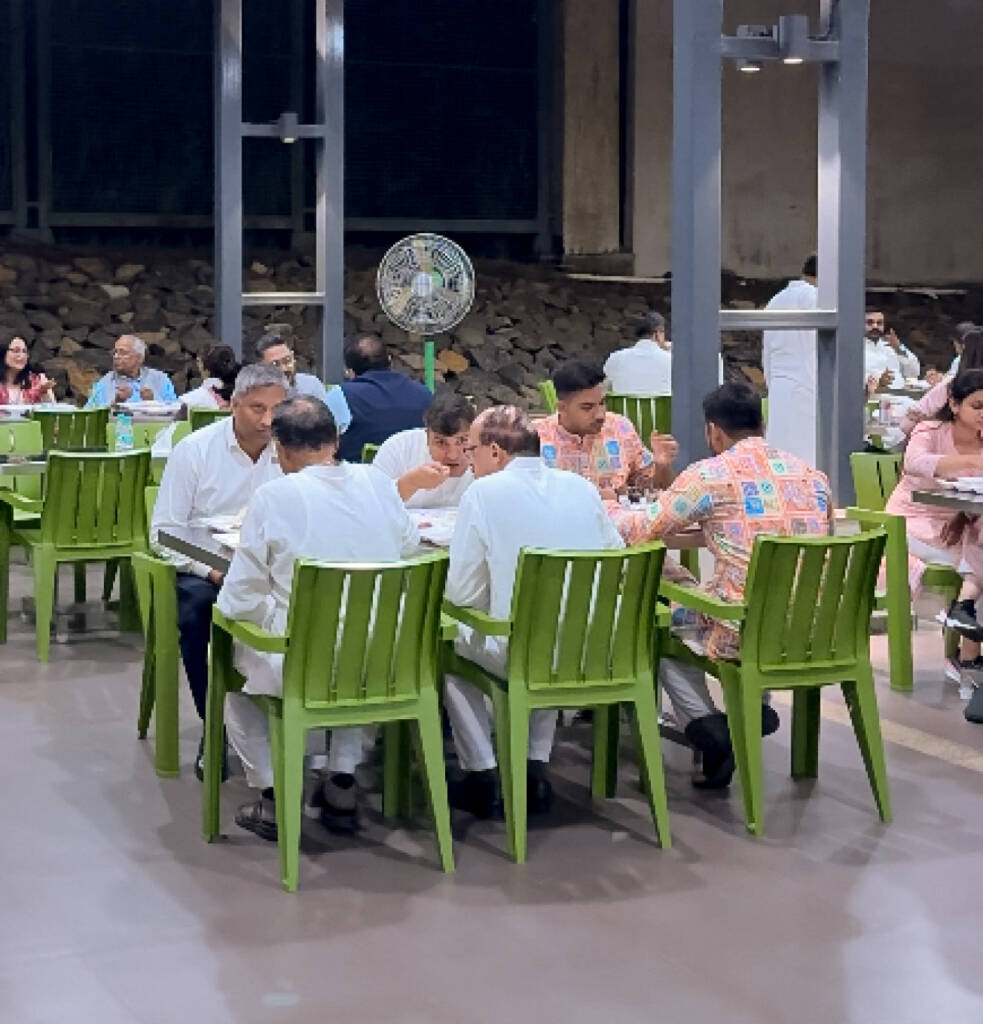
Chowpatty: The Outdoor Foodcourt


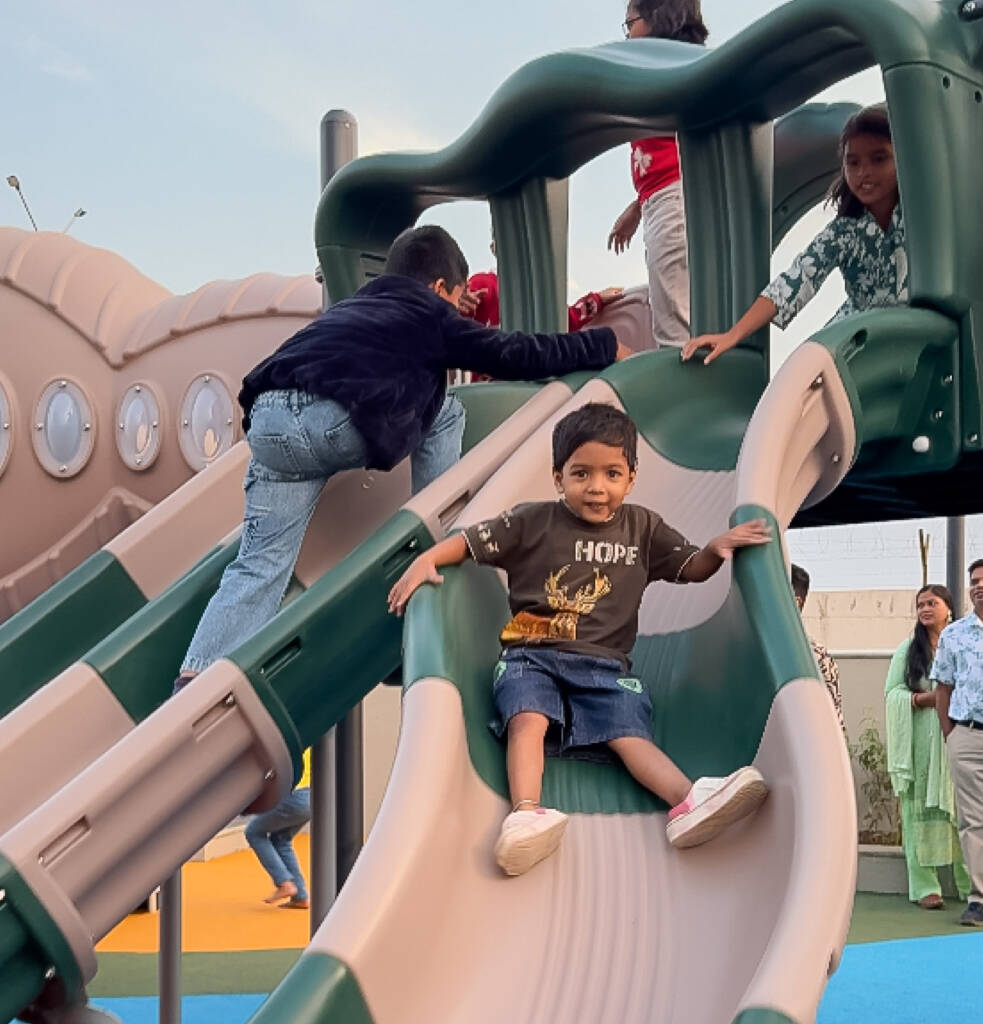
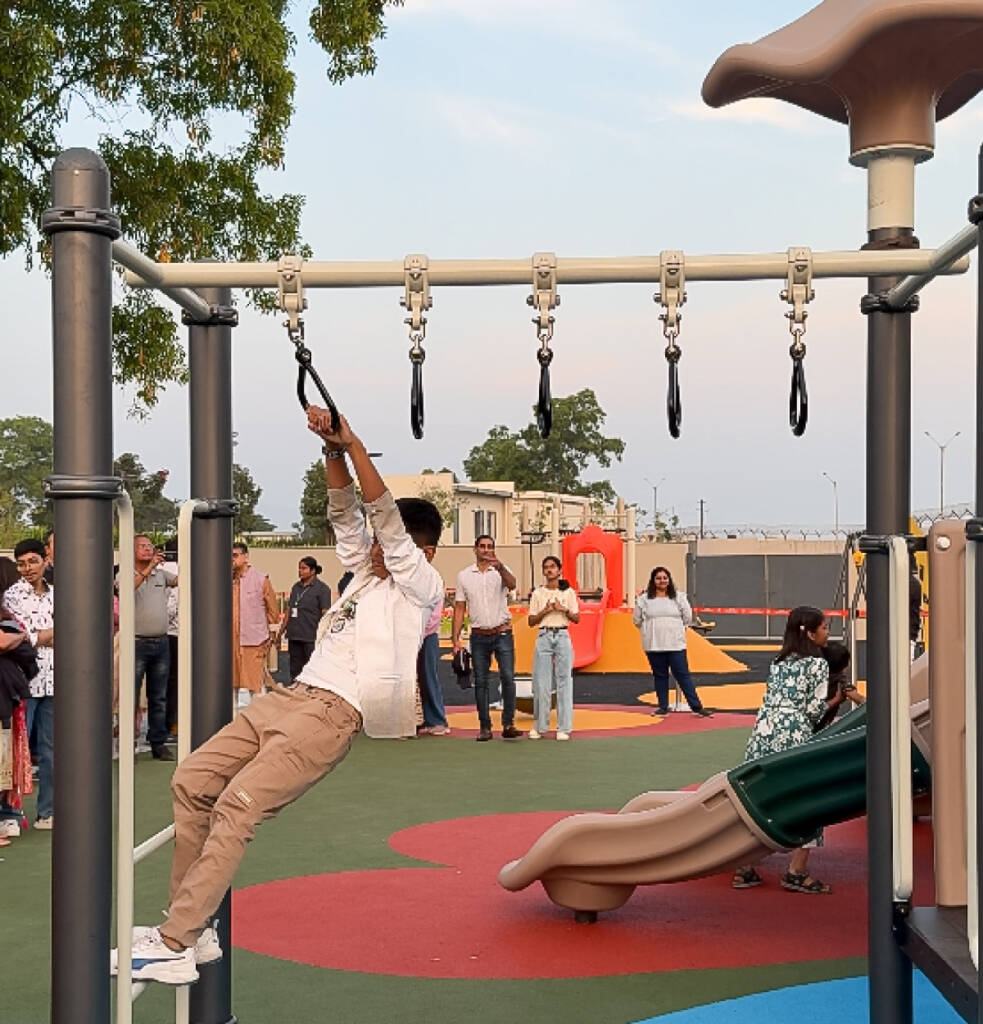
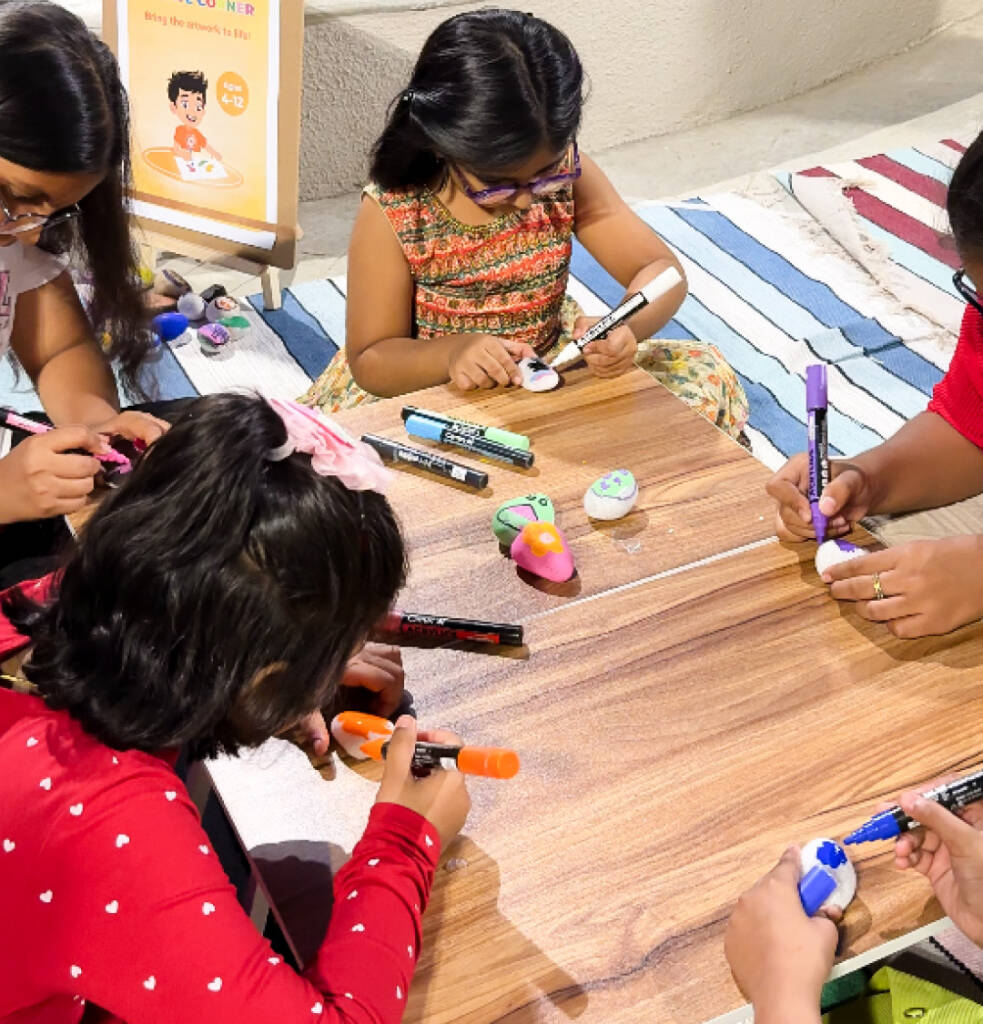
Kridangan: Kids Play Area